
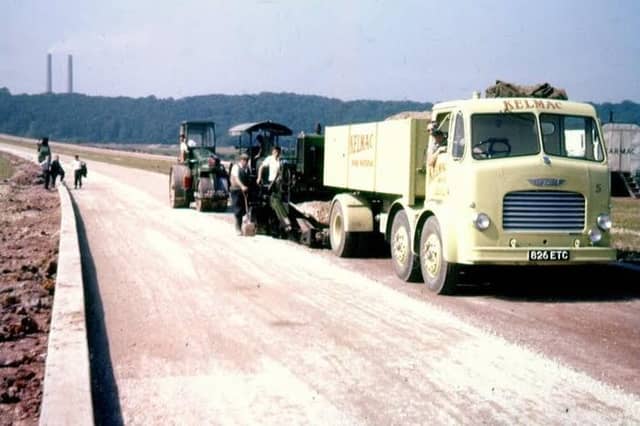

Seventy years ago this month, work started on Preston Bypass - which would become the first motorway in the country, the M6.
Engineered by Lancashire County Council, the experimental 8.25-mile road was designed to relieve congestion on the A6 through Preston. On June 12, 1956, Hugh Molson, the MP from the Ministry of Transport, triggered temporary traffic lights and commanded a bulldozer to clear the first section of hedge beside the A59 at Samlesbury.
The construction faced severe delays due to relentless rainfall in the winter of 1956–1957, turning the work sites into mudbaths and pushing the opening back to December 1958.
The Ministry of Transport initially only agreed to fund two lanes in each direction rather than three. But Lancashire's County Surveyor, Sir James Drake, had designed the bridges and layout for a three-lane profile to accommodate future widening, cementing the blueprint for future UK motorways.
Today, 70 years later, at 232 miles long, the M6 is the longest motorway in the United Kingdom. It serves as a major north-south backbone through England
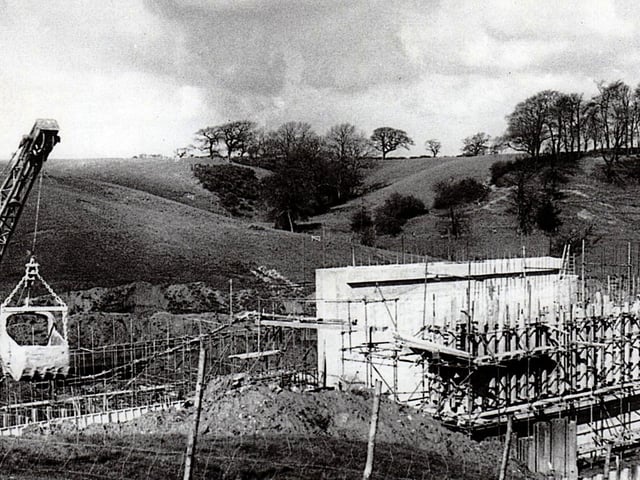
5. Preston bypass
Construction of the reinforced bridge supports that will carry the new Preston Bypass at Fernyhalgh Lane, Fulwood. Picture courtesy of Preston Digital Archive Photo: Archive
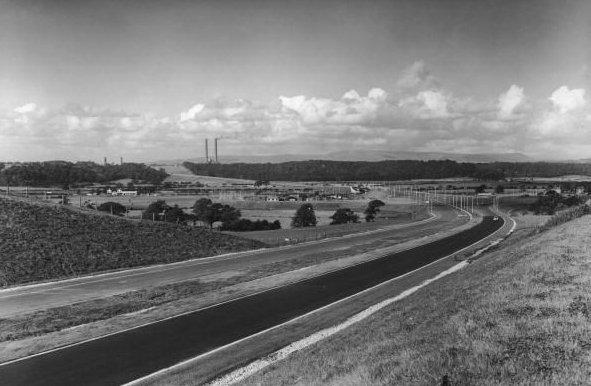
6. Preston bypass
Preston bypass seen just prior to opening. It had been decided that lighting was only needed at the Samlesbury Interchange and at the terminal roundabouts. However, towards the end of the construction period, when most of the lighting columns in the Samlesbury interchange had been erected, the Minister of Transport visited and he expressed concern at the effect on the surroundings of the large number of columns in such a small area and immediately ordered their removal Photo: Preston Digital Archive
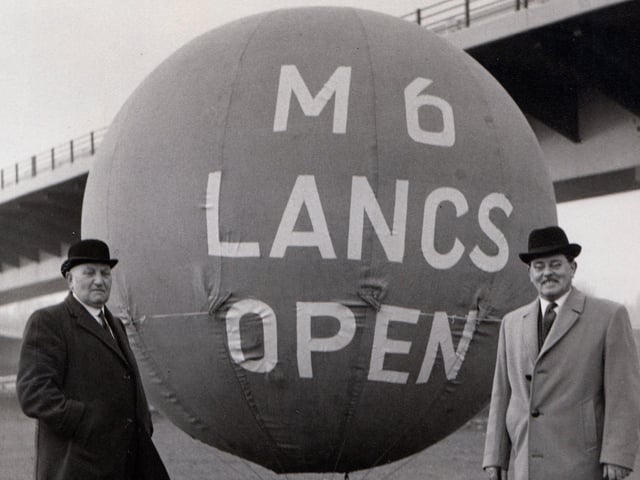
7. Preston bypass
Mr. Metcalf (left) and Mr. Drake (right) at the opening of the M6 - the Preston bypass Photo: Preston Digital Archive
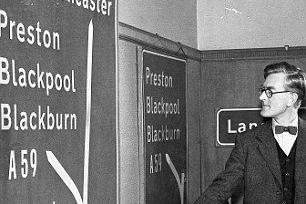
8. Preston bypass
Signs are unveiled for Britain's first stretch of motorway, to be opened by the Prime Minister, Harold Macmillan. Macmillan called the eight-mile Preston bypass in Lancashire the symbol of the opening of a new era of motor travel in the United Kingdom Photo: Archive