
The West Midlands and Black Country hotspots that are overrun with invasive plants

There is a high density of invasive plants in certain areas of the West Midlands
Worcester is the invasive plant hotspot of the West Midlands, new research has revealed.
The analysis, by England and Wales property specialists SAM Conveyancing, examined records of 20 of the most common invasive plants to find where in the UK homeowners and property buyers are most at risk.
Each local authority was ranked by the number of recorded invasive plant occurrences per km² of land, a measure of how densely the species are packed into an area.
Worcester heads the regional table with 18 occurrences per km², placing it 25th nationally. Himalayan balsam is the most commonly recorded species here, with 122 of its 603 total occurrences, followed by buddleia, the butterfly bush (91), and Japanese knotweed (81).
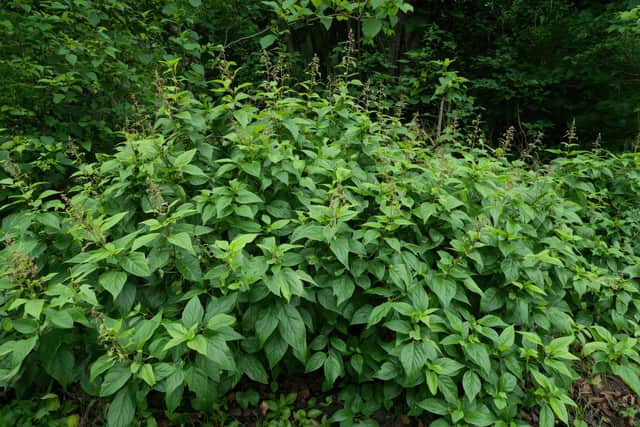

Dudley follows on 16 occurrences per km², 35th in the UK, where Japanese knotweed is the most recorded plant (264 occurrences), just ahead of buddleia (253).
Birmingham takes third in the region and 46th nationally, with 14 occurrences per km². Japanese knotweed is its most recorded species (687 occurrences), ahead of buddleia (636) and Himalayan balsam (574).
Wolverhampton (13 occurrences per km², 54th nationally) and Sandwell (11 per km², 66th) complete the regional top five. Buddleia is the most recorded plant in Wolverhampton, while Japanese knotweed leads in Sandwell.
Across the West Midlands as a whole, Himalayan balsam is the most commonly recorded invasive species, with more than 11,000 sightings, ahead of Japanese knotweed (6,455).
Comment Guidelines
Iconic Media encourages reader discussion on our stories. User feedback, insights and back-and-forth exchanges add a rich layer of context to reporting. Please review our Community Guidelines before commenting.