
Life was a Laff for Suzi Perry's dad during the heady days of Wolverhampton's famous nightspot
For 14 years, Wolverhampton's Club Lafayette was a favourite of Britain's rock royalty. SUZI PERRY talks about her family connection.
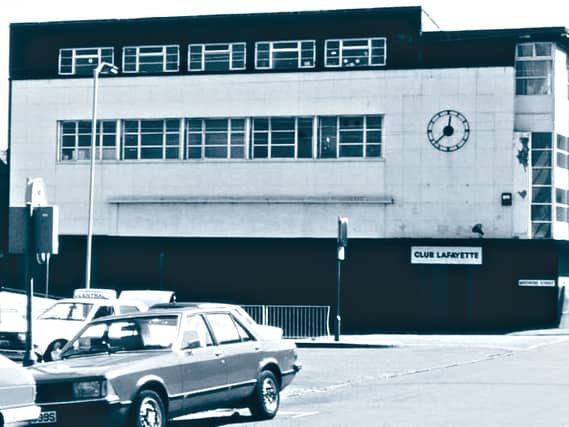

This week, Wolverhampton’s much loved historic music venue, Club Lafayette is being honoured with a blue plaque. The Wolverhampton Society has chosen the building on the corner of Thornley Street to mark the phenomenal energy, community and joy shared there between 1968 and 1982 and rightly so.
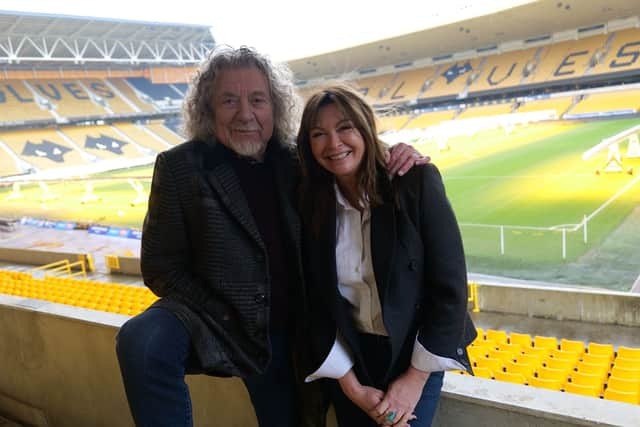
I was too young to revel in the delights of the Moody Blues, Led Zeppelin, Slade etc at ‘The Laff’, but if you’re over 60, I bet you’ve got a story to tell!

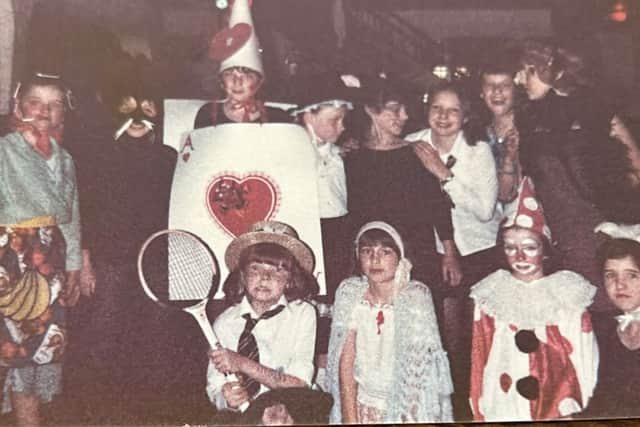
I did however enjoy a couple of parties skipping around the infamous dance floor though, one was for my 10th birthday and the other, my friend Cheryl Maddocks’ fancy dress disco. Why? because our dads were two of the owners of the club, two of the seven-strong line-up that made up Astra, an agency which managed and promoted bands, venues, comedians and DJs. Their aim with the Lafayette was to bring live music into our town with 12 bands a week always the the goal.
Stan and Pete Fielding, Len Rowe, Maurice Jones, George Maddocks, Alan Clayton and Tony Perry were Astra in the late 60s. Their vision and instinct created an unforgettable scene in Wolverhampton and changed the landscape of music in the Midlands. Before ‘The Laff’ everything was done and dusted by the witching hour. Before ‘The Laff’, artists would skip the delights of Wolverhampton if they’d played Birmingham thinking that we were just a suburb of Brum.

Over the years much has been documented about the Wolverhampton hotspot; from Stevie Wonder jamming during a late-night post gig drink to Keith Moon hanging upside down from the balcony and of course the Sex Pistols playing undercover as the Spots (Sex Pistols On Tour). They had been banned from live venues at the time so were being promoted under a pseudonym - you didn’t need to be Sherlock Holmes really did you?
My dad, Tony Perry, remembers seeing Sid Vicious cutting himself during rehearsals with no-one batting an eyelid and although their sound didn’t float Dad’s boat, he did tell me that Johnny Rotten had the crowd eating out of the palm of his hand, which he described as ‘incredible to witness’
I used to visit my dad on a Saturday morning in the early 80s if he was working, Astra was based in the same building as the nightclub. I would hop on the 543 bus from Castlecroft with my mates and we would rock up for a Coca-Cola, having traversed the tacky carpet with the stale smell of beer and cigarettes coating our nostrils. I still have an strong affinity for venues where your feet stick to the floor, they usually ooze soul.

‘The Laff’ was more than a nightclub though. The heart beat outside the venue, too, through a football team, a stock car racing concern and endless friendships that have endured the test of time.
My memories are limited of course. I can relay stories but for this special occasion I wanted to know what it was like to be at The Club Lafayette, what it was like to play there and why was it so special?
So I enlisted the help of two of our own who just happen to be a couple of the greatest music icons in history, Robert Plant and Noddy Holder
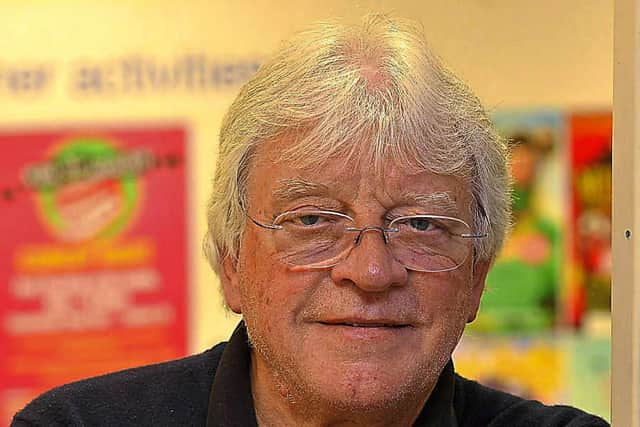
Robert Plant
The Club Lafayette opened September 10, 1968, and Led Zeppelin played their first European gig there on February 24, 1969 but Robert’s memories of that performance aren’t clear.
“I can't remember really the internal chemistry of myself in gigs. I know I was always nervous and I think that's been my crowning glory all the way through. I never took anything for granted, even though I was surrounded by the three finest musicians. I could hide in their brilliance, which I always think I did, you know. I wrote good melodies and lyrics appropriate for my age at the time, but I never took anything for granted and that's why I have at least two projects always working.
"I remember when ‘The Laff’ came, it was like this temple, you know, for us all, because we could talk about music all night and people would fall asleep everywhere as we just droned on and on about a solo in that particular song or whatever it was. So it was great. I loved it lots and John Bonham and I went there a lot with the ladies.
"In the early days, we were quite ostracised as musicians.
"We weren't really welcomed, particularly socially in pubs, restaurants, hotels, bars and cafés. We were on the outside. We were sometimes not even allowed into places.
"So as ‘The Laff’ developed, not only were we able to find a place with an affinity with people that we could relate to, but it became almost like a rerun of the very early days. We used to rehearse in youth clubs and we'd be the little group in the back room of the club and all the people who were members of the youth club would be a part of our little gang.
"So the Laff became like a super-duper, far-out fancy-pants's version of that for us as musicians, because we could go there and blag our way in. I was already on the road then with Zeppelin and the management used to like me being there because we were cooking on gas.
"Myself and John knew quite a lot of the bands that played there so it was like a fraternity, it was really good. It gave our generation respect, not in as much as the bouncers liked us or anything like that but it was a home for us.
"So the progression from the youth club and occasionally opening the show for somebody at Willenhall baths or something like that, was a major move forward because there was a nice credibility about having a nightclub, which wasn't just built for the kind of nouveau-riche swish guys, this was a proper place for people to dance have a great time.
"You would always see people week after week that you got to know and it was good. I always wanted to be in a club and from those days when we first started playing way back around Stourbridge to being there, it was a real gift for us all and it took us seriously as players, as musicians, we had a home.
"So there we are in the middle of this utopian free love, free-thinking, free-drinking paradise of entertainment on a Friday night and what a horror for me to suddenly find in a corner, huddled together, sportsmen Geoff Palmer, Johnny Richards and Kenny Hibbitt!
"I was furious! I went over to them, I said: 'What an earth do you think you're doing? You know, I've got a season ticket in the old wooden stand here on Waterloo Road. You guys aren't going to be worth anything, how can you work a one-two with an overlap in fullback when it's 11 o’clock'.
"But they met their wives there, I met most of my wives there! It was funny really to see our heroes there, when good King John could turn on a sixpence.
‘The Laff’ made a good job of it, it was for everybody and it deserves to go down in history. It carried the essence and the energy of the time.
"We have a venue over the road, which is fantastic and it's got its history. I remember opening for the Montanas and Dripper Kent and all those people way back but it was a big, big stage, it was quite austere and it was seldom full. Whereas, ‘The Laff’ was intimate, it had great lighting, it was exotic and it was much more appropriate for my kind of idea of entertainment. It deserves to go down in history, sure does."
Noddy Holder
Noddy played The Club Lafayette many times and reflects fondly on its’ place in history and how a nightclub put Wolverhampton on the map.
“We could work five or six nights in the Midlands at places like The Ship and Rainbow, Queen Mary Ballroom and JB’s, but ‘The Laff’ was the most important.
"It was what I would call a midway venue where bands that were about to break could play as well as the smaller developing artists. In them days it was at the forefront of Wolves clubs. Don Powell was always hanging out there. Every city had their clubs that bands liked to play and ‘The Laff’ was Wolverhampton’s, we thought it was quite posh at the time!
"But it was also a sociable place for bands to meet up, have a drink and meet girls so it worked on two levels; to catch up with other musicians and to see bands on the verge of breaking, like Queen. I knew Freddie quite well, he had a stall on Kensington market selling shirts and I’d buy a few off him. He used to say to me ‘one day I’m going to be a big pop star like you!’ And I’d say ‘F*** off Freddie!
"Every town needed a ‘Laff’, a place to see bands before they became global, a place to socialise, it was very important and it was really the only place we could go after a Midlands gig for a drink because of the late licence. North of London it was difficult to get a drink after 12, except for ‘The Laff’!
"Wolves has always been known for music, especially rock music. So many top bands hail from these parts and the surrounding areas; Led Zep, Black Sabbath, Judas Priest and then there’s us of course. There was a theory that the ‘Black Country’ air played its part in creating a gravelly voice, well its a theory anyway!
"We were known for our big sound, but we had a trick. We used to mic the back line and cross wire our speakers so wherever we stood on stage we could hear the entire band. It added another layer of sound to add to our already loud reputation! But once you’d played in America you needed bigger venues, but that's another story. ‘The Laff’ was a one-off place and what days they were! I’m pleased for Tony and the boys, they deserve to be recognised.”
So here’s to The Club Lafayette 1968-1982. A dream that became reality. Where now can you watch a live band on any given night and enjoy a plate of steak and chips afterwards? What days they must have been. If you pass ‘The Laff’ on Thornley Street, give the little blue plaque a nod for the unforgettable memories it created.
Perhaps this is the time to quote Johnny Rotten as he ended the Spots: “Ladies and Gentlemen, that was the end of a wonderful evening, thank you very much and drop dead”
Comment Guidelines
Iconic Media encourages reader discussion on our stories. User feedback, insights and back-and-forth exchanges add a rich layer of context to reporting. Please review our Community Guidelines before commenting.