Wolverhampton NHS Trust hoping to find genetic disease links
A ground-breaking project is being launched by the Royal Wolverhampton NHS Trust to identify genetic links between family members who suffer from cancers and other rare diseases.
The £250 million '100,000 Genomes Project' was introduced by the government in 2012, in an attempt to sequence 100,000 genomes from around 70,000 people.
It aims to look at DNA to effectively diagnose and route out the cause of diseases in families, as well as personalise the treatment given to them.
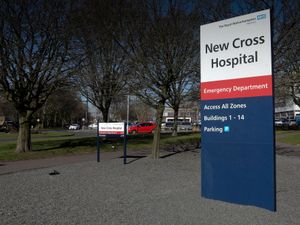
It will take four years to complete, meaning people in Wolverhampton can sign up to find out more about the potential causes of their illnesses. The work will take place at New Cross Hospital, as well as Walsall Manor and Russells Hall in Dudley.
Charlotte Hitchcock, one of three genomic ambassadors for the project, said: "It has been wonderful to see this project take shape.
"It is so important we work to find out more about these diseases, to look at personalising medicine and create genetic medicine.
"With these advances, it is hoped the doctors of the future will just call this 'medicine'."
Ms Hitchcock is working closely with the lead clinician, Professor James Cotton, to implement the project and identify suitable participants.
Anyone chosen will have to give bloods, some of their cancerous tumour or a sample of their rare disease and allow the team access to their medical information.
Work will be done to effectively market the project, focussing on the positive possibilities of finding an effective treatment. David Loughton CBE, chief executive of the trust, said: "This is the most ambitious project in Wolverhampton."
Both rare diseases and cancers are strongly linked to changes in the genome, a person's DNA. Cancer starts with the same DNA as the patient then develops mutations which enable the tumour to grow and spread.
By taking DNA from the tumour and from the patient's normal cells and comparing them, the project hopes to identify the changes that have taken place in order to provide better treatment.
Those who have rare diseases will be tested alongside two of their closest relatives
.