Cuts will leave Wolverhampton finances resembling those of 'a failing African country', expert warns
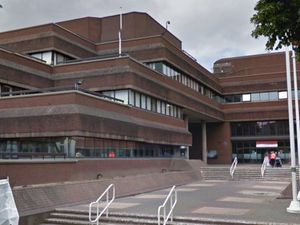
Continued Government cuts could leave Wolverhampton council's finances resembling those of 'a failing African country', a leading financial expert has warned.
Borrowing at the cash strapped authority stands at around £585.8m, with £24m of savings due to be made over 2016/17 as part of £160m worth of cuts over five years.
Interest repayments on the general fund alone now stand at £246,000 a week, while for the housing revenue account the figure is £233,000 a week.
Crawford Spence, a professor of accounting at Warwick Business School, said the consequences of budget cuts have been 'fermenting away' in the background.
"Now we are really starting to see the effects come to the fore," Prof Spence said.
"The council could easily find itself in a position where it is like a failing African country, trapped in a cycle of debt repayments that it can't make.
"In broad terms I don't see how they are going to get out of the situation unless we have a dramatic shift in policy from the Government."
Mr Spence said that like many councils Wolverhampton was 'heavily reliant' on getting more money from the capital market.
In Wolverhampton council's case this means investments such as improvement work to the Civic Halls, the city centre roads improvement scheme and the Interchange 10 project.
"This strategy comes with its own risks," Mr Spence added. "Whenever you become reliant on the capital market there is always the danger that things don't pan out as expected."
Overall Wolverhampton council has lost more than 50 per cent of its spending power since the Chancellor's comprehensive spending review in 2010.
And the authority is bracing itself for further budget cuts once the full details of the local government finance settlement are revealed early next year.
Wolverhampton council's finance chief Councillor Andrew Johnson said: "There is no doubt that like many local authorities we are under severe financial stress.
"There is only so many efficiency savings we can make involving people's jobs. There is only so much extra income you can make from increasing charges and reducing services.
"If things continue the way they are it will be very difficult for us, there is no doubt about that.
"The bottom line is there is very little else for us to cut back. Our main areas of expense are adult social care and children's services. We have moral and statutory obligations to protect these services, but there is increasing pressure.
"The scale of cuts is huge against our net spend. We are talking about figures that would have been unimaginable in 2010."