Staffordshire war training camp diary tells tale of one man's heroic act
An act of heroism on a Staffordshire wartime training camp 100 years ago has been unearthed in a regimental war diary.
Second lieutenant Randolph Ridling threw himself into a trench to save the life of a recruit who had taken the pin from a live hand grenade, taking most of the impact in the ensuing explosion and was awarded the George Medal.
The brave act by the New Zealand officer took place during the First World War at Brocton Camp on Cannock Chase where many Australian and New Zealand Army Corps (ANZAC) soldiers were trained for battle.
The discovery comes as veterans around the world united to commemorate Anzac Day last week, marking the contribution of volunteers from Down Under to the war effort.
Cannock, where 73 Anzac soldiers are buried, will be holding one of the UK's biggest ceremonies this Sunday.
Details of the training camp accident are contained in the war diaries of the 5th (Reserve) Battalion of the New Zealand Rifle Brigade, uncovered by Lee Dent and Richard Pursehouse of local military historical research group The Chase Project.
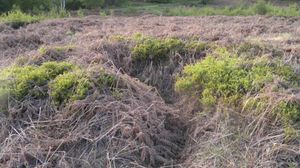
The pair had first come across the story in local newspaper archives during the course of their research and investigated further, eventually tracking down the Brigade war diaries in New Zealand and talking to a relative of the war hero.
Randolph Ridling was a schoolteacher in Auckland when war broke out in 1914. He married in May1915 and volunteered a few months later, shortly after his young wife died. He was quickly promoted and in October 1916 was sent to Flanders. He took over command of C Company, 4th Battalion New Zealand Rifle Brigade in February 1917. The Brigade was moved to the Messines Ridge area, south east of Ypres, where, exactly a year later, Ridling was shot in the arm when a 200-strong German raiding party crossed No Man's Land and attacked the New Zealand trenches.
He was brought to England and eventually transferred to the New Zealand Rifle Brigade Reserve Depot at Brocton, where he was assigned 'light duties' as he continued to recover. Initially he was the Assistant Adjutant at Brocton, and as his strength improved he also became the Bombing Instructor, training recruits at Cannock Chase.

On April 19, 1918, one of the recruits, Rifleman 63475 John Archibald McCurdy, pulled the pin from his Mills bomb and dropped it in the throwing bay and 'lacking the presence of mind to escape' he kicked the bomb towards the entrance and retreated to the inner end of the bay.
Seeing the danger and realising the grenade would explode in a couple of seconds, Ridling shouted at the rest of the men to clear the trench, grabbed McCurdy but, as he attempted to get him clear, the grenade exploded, severely wounding him in the leg and groin.
His action was strongly recommended by General Godley, Commander of the New Zealand Expeditionary Force, who wrote: "The coolness and bravery of Lieutenant Ridling undoubtedly saved the man's life."
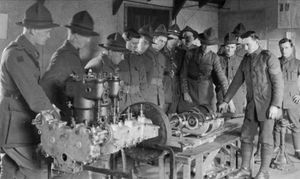
Ridling's academic background was put to good use after the grenade incident, and he became the Education Officer at Brocton, ensuring that wide and varied courses in animal husbandry, mathematics, mechanical engineering and even therapeutic classes such as metal moulding classes were provided at Brocton.
He was also instrumental in creating the glow-worm farm for night map-reading training on the Messines model that was created at the camp.
After being discharged from the Army on September 28, 1919, Ridling went on to Queen's College Cambridge where he gained an M.A (Diploma in Agriculture) in 1921, and eventually returned to New Zealand. He remarried and adopted a daughter who would eventually offer his medals on permanent loan to the National Army Museum in New Zealand. He returned to teaching, becoming a supervisor and inspector, and eventually a college director until retiring in 1950. After retirement he was active in UNESCO trips abroad, including to Beirut.
Awarded the Albert Medal for his heroism, Ridling was invited in 1971 to swap it for the George Cross but wrote to the Queen asking if he could keep his original medal for sentimental reasons. The request was granted.
Randolph Ridling died in 1975 in his home town of Wellington, aged 87. The Chase Project is currently researching what happened to Rifleman John Archibald McCurdy.