Build new roads then sell them off, says West Midlands transport authority
New roads in the West Midlands should be built at public expense then sold off to private firms to get the money back, transport bosses have claimed.
The radical plan by transport authority Centro was put to a committee of MPs looking at ways to fund future road projects.
Centro, which oversees public transport and has been grappling with its own multi-million pound funding cuts, has previously hit out at the M6 Toll and said the under-used private motorway should be brought into private ownership.
But in written evidence to the Commons Transport Committee, it said roads should be built at public expense and then sold to private operators.
The organisation, funded by Wolverhampton, Sandwell, Dudley, Walsall, Birmingham, Coventry and Solihull councils, wants to see roads funded in the same way as HS1, the original high speed rail line that takes trains from London to the Channel Tunnel.
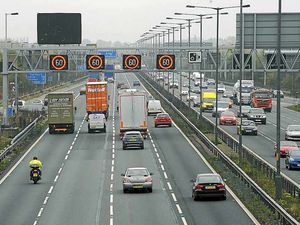
While the M6 Toll, operated by Midland Expressway (MEL) did not cost the taxpayer a penny to build, its high charges have proved a turn off for motorists and the road is considered to not have cut congestion on the M6.
In its evidence, Centro said: "From the West Midlands experience, there appear to be two models of private financing of new roads.
"Firstly there is the model used for design build and operate the M6 Toll which has so far not performed as originally intended. This model of financing relied on private companies developing their business models based on assumptions to long range traffic growth forecasts. This meant a high level of risk was built into the model and costed accordingly and with regulation to toll structures or levels.
"This is the model used for the M6Toll with limited benefits.
"Our studies suggest that approximately there remains more than 30,000 vehicles per day which pass through the West Midlands that could otherwise use the M6Toll if the apparent barriers to greater usage were addressed. Tolls appear to be now set at levels to manage MEL debt servicing rather than be aligned to road user needs and encouraging greater usage.
"The M6 Toll only carries approximately half the 70,000 vehicles per day the road was originally envisaged to carry. In comparison, the M6 carries 125,000 vehicles per day. This adds further weight to our view that the M6Toll needs to be fully utilised and that barriers to greater usage of the M6 Toll addressed to maximise the economic and environmental opportunities for the West Midlands.
"The second model is to use the concession model once the strategic infrastructure has been built and opened. This allows far greater certainty of risk for actual road usage which is likely to drive a more competitive concession process to the benefit of the tax payer. This model would require the public sector to pump prime the infrastructure with the private sector leasing or even buying the infrastructure thereafter. Once the public sector underwriting period was complete and revenues known, growth and operating costs could be modelled and valued with certainty. The capital raised from the concession could then be recycled to fund other appropriate transport schemes."