Mystery over skewer death
A pathologist today told an inquest he believed a Walsall pensioner found with a barbecue skewer in his neck had impaled himself in a tragic accident.
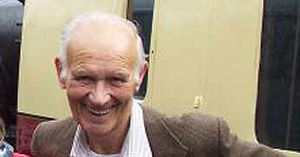
Dr Allen Anscombe said his investigations concluded 80-year-old Leslie Ince had suffered a stroke and received the injury in a state of confusion.
But an open verdict was recorded by Coroner Robin Balmain in Dudley this afternoon when he said the accident theory was "simply a theory."
The hearing was told it was Dr Anscombe's examination that led detectives to halt a two-year murder investigation. They had previously thought he had been attacked by an intruder.
Mr Ince died on April 6, 2007, six weeks after being discovered by his son Peter, who called at his home in St Ives' Road, Park Hall. The suspected attack sparked a high-profile investigation with detectives appearing on Crimewatch to hunt down the killer.
Dr Anscombe was drafted in by police to help investigate the case after their previous investigations drew a blank.
Speaking at the inquest today, Dr Anscombe said he believed Mr Ince had suffered a stroke.
"In his confused state he then crawled around the home crawling into a downstairs cupboard," he said.
Dr Anscombe said he was adamant the pensioner then caused injury to himself with the 14in long skewer, which was being stored in the cupboard.
He said: "I believe this was purely an accident. I think he had a stroke, became confused and began crawling around the home in a state of confusion.
"This can often be the case when it comes to victims of strokes. It is possible that as he crawled into the cupboard he then impaled himself on the barbecue skewer."
A post-mortem report revealed that Mr Ince died of multi-organ failure with the barbecue skewer injury a direct cause.
Mr Ince's son Peter relived the horror of finding his dying father, who had been lying in the cupboard for at least three days.
He said he had been due to take his father to hospital for a heart operation on the day in question. He said his initial impressions upon seeing his father slumped in the understairs cupboard was that he'd suffered a stroke. But the inquest also heard Mr Ince had told his father: "We'll find out who's done this".
Mr Ince also said his father's shoes had been just a couple of inches from the inside of the front door when the policeman forced entry on February 21.
He told the inquest it would have been difficult for anyone to have left the shoes in that position before letting themselves out.
"I would have thought to do so you would have had to have held the shoes and close the door quite close to your arm".
The pensioner had been due to have a stent fitted for the heart condition he suffered from on the day he was discovered. But his son told the inquest he was otherwise fit and healthy.
"He often preferred to walk places that get the bus," he said. "He was extremely independent, did all his own cleaning and would often come up to help me do work."
The inquest heard Mr Ince normally kept his home tidy but that it was in a "state of disarray" when the police forced entry. The phone was off the hook.
Mr Ince said his father was occasionally "controversial" and had had a brick thrown at his home some time before his death. He also revealed his father had talked about selling his house, as he wanted to spend more time with his daughter in Canada.
Detective Superintendent Matt Ward led the two-year investigation. He said there was no evidence of forced entry or any signs that things had been stolen.
A total of £7,000 had been recovered from one of the bedrooms, he added.
Mr Balmain said it was a "bizarre case". He said he could not be sure the death was an accident.
He said: "The accident theory is simply a theory and cannot be backed up conclusively by any other evidence."