Evolve or die: Secrets of West Brom's academy
Stephen Hopcroft is speaking to me on the phone from a field in Ireland, where he's watching the best Under-14 teams of the Emerald Isle slug it out in the Kennedy Cup. writes Albion reporter Matt Wilson.
It's one of several big football festivals Albion's head of junior recruitment will take in over a busy summer, but he's got a particular fondness for this tournament because three of Albion's current academy team were first scouted here.
Dara O'Shea, 17, and Robbie McCourt, 18, are both defenders, while Zak Elbouzedi, 18, is a Dublin-born skilful winger with a Libyan father.
All three were promoted from the U18s to the U21s this season and all three have been called up to Ireland's youth teams.
"They were all picked up here before they went into the national set up," explained Hopcroft.
"You introduce yourself to the parents here, so if they develop you're not doing it at the same time as everybody else. Hopefully we steal a march on the bigger teams."
O'Shea and McCourt are both products of St Kevin's Boys academy, who famously produced Irish internationals Jeff Hendrick and Robbie Brady in the same year.
St Kevin's have had a working relationship with Albion since 2004, and bring youngsters across the Irish sea each year for the Baggies to look at.

But eight years ago Brady picked Manchester United shortly after his 16th birthday and Hendrick chose Derby County, where he still plays.
"Since then we've become a category one academy and we're competing with the bigger boys.
"We're getting those type of players. They've had lots of chances to go elsewhere, but they come to us, just by identifying them earlier and starting to build relationships with their parents."
When Hopcroft joined Albion from Birmingham City nine years ago the club didn't have the elite category one academy status it currently holds.
Alongside Walsall, the Baggies were the only 'centre of excellence' in the Midlands and competing at that second tier was hurting the club. Hopcroft and Ashworth – who became technical director in 2007 before the FA snapped him up in 2012 - had to get creative.
"If you stand in the queue with Manchester United, Man City, and Arsenal, you're going to be at the back of the queue," said Hopcroft.
"We needed to go through the back door, at a club like West Brom you need to think of innovative ways of recruiting players.
"If we did what everyone else was doing we'd be bottom of the pile so we started to do something nobody else has done."
The pair identified a series of junior teams in Birmingham and the Black Country and started giving them funds to develop their clubs, coaches to develop their players, and on occasion, let them use Albion's facilities as well.
The deal being that, if the Baggies wanted to take one of their best youngsters, they could.
It's a scheme that brought Saido Berahino and Jonathan Leko to the club, as well as Tahvon Campbell, who spent the second half of last season on loan at League Two Yeovil Town.

"I've just lost my assistant to Stoke," said Hopcroft. "He's on a plane every weekend looking all over the world throwing money at it.
"We want to take pride that there's boys in our changing rooms in Birmingham and the Black Country.
"That's where the vast majority of our boys come from and we want that to continue."
Current partners include Tividale academy, whose men's team play in the Northern League; Continental Star, whose first team play in the Midland League; and CS Colts, a junior team that provided Leko.
"Aston Villa might go to Continental once every five years and try to take their best player," explained Hopcroft.
"When we go to get their best player they help us, because we've supported everyone else at the club for the previous four years."
Six years ago Hopcroft introduced another scheme at youth level with the aim of giving uncovered talent a second opportunity to flourish.
Albion's academy has around 150 boys in it between the ages of 8 and 16 but the Baggies set up the 'shadow academy', another whole raft of teams underneath the main academy for players who don't quite make the grade at trials.
The West Brom Colts are staffed by trainee coaches hoping to one day make the step up to the real academy and they include players hoping to impress enough to get picked up by the main academy.
For two nights a week the Colts work alongside the main academy, take part in the same technical coaching drills and enjoy the same facilities.
"If you hadn't been successful at trial, the only thing we used to say was sorry, go back to your junior club," explained Hopcroft.
"Now we want those who just miss out to go into the shadow academy.
"It's produced over 100 academy players in the past five years, 70 for other club's academies and 30 for ours. Obviously we think we've got the best 30."
Nationally, only one in five young trialists makes it into an academy system. Thanks to the Colts, at Albion it's three in five.
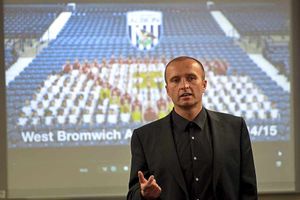
Although the shadow academy hasn't produced any first-team players yet, Hopcroft reckons it has given dozens of children an opportunity with a second trial they wouldn't have previously had.
"Because they've been training in the shadow academy, a lot of that nervousness and unfamiliarity with the surroundings goes away, so they can concentrate on getting on with the trial," he said.
"Take the nerves away and that gives any boy a 50% better chance of performing to his full potential."
However, this summer Albion are making changes to their academy system again.
The club are introducing two new schemes, one that is positional-specific, and one designed to match up similar-sized players with each other.
Boys develop at different ages and sometimes the smaller children can get physically bullied out of games when perhaps they have the ability to succeed.
"You need to have all four corners of attributes to succeed – you need to be physical, athletic, technically gifted, and tactically sound - if you have one missing you're not getting a trial," said Hopcroft.
"So what we're going to do is put small technically gifted players together, because when you get your little Iniestas, they normally get run over in the traffic.
"At the opposite end of that spectrum are the big quick boys who need to work on their technique.
"We're being more patient with players. When you offer a trial you want to give them the best chance of success."
The position-specific programme gives wannabes two nights of training a week focussed on their particular position.
"We're doing that for all age groups, all positions," said Hopcroft.
"Our shadow colts coaches who are trying to get jobs in the academy will take the training.
"So for example if he's a centre-back he'll be taught on marking, getting on the safe side, heading the ball, marking correctly. All the things that he needs."
Ashworth may have moved on, but Hopcroft is still at the Baggies with academy manager Mark Harrison, who's been at the club for 11 years.
After the success of Saido Berahino, and this year's emergence of Jonathan Leko, Sam Field and Tyler Roberts, there's a positivity around the Albion youth ranks.
Tony Pulis arrived at The Hawthorns with a reputation for mistrusting academies and last season the Welshman had plenty of harsh words to say about the way under-21 football fails to prepare the next generation of players.
But he's been impressed with what he's found in the Black Country.
"It's the best club I've been at in respect of quality of talent but it's no good having that quality and talent if it's not tested in correct places," said Pulis, after Leko's debut at Sunderland.
Hopcroft was wary of Pulis's reputation but he's been pleasantly surprised by the way Albion's head coach has embraced what he and Harrison are doing.

Pulis even allowed the under-8s to train with the first team before the final home game of the season against Liverpool to persuade some of those young players being courted by bigger clubs to sign for the Baggies.
The message was simple, stay with us and one day you could be in this first-team.
"He's been brilliant with us," said Hopcroft. "He's had more players from the academy training with him than any manager than we've had before. He's been better than any manager I've worked with."
Nurturing the likes of Berahino and Leko into Premier League players from local clubs in today's global moneyed Premier League is a huge success.
Convincing Pulis that there are potential first-team players in the youth ranks is another one.
Hopcroft and Harrison are trying to build something at Albion, and in 2012 they joined the big boys with category one academy status.
Albion have got more money now than ever before but the junior scouts aren't jetting off around the world.
The majority of Albion's kids are from the West Midlands, with a few sprinkled in from Ireland.
"When you want to make an impression at academy level there's only two ways to do it, throw lots of money at it and have quick results or develop a long term plan," said Hopcroft.
"It's like planting seeds and waiting for beautiful flowers, some don't grow, but some do like Saido, Leko, and George Thorne.
"You can do a Chelsea, or you can take a longer term view of it.
"Hopefully over the next few years now we will see that we have started to produce players that are good enough."