The big picture of Wolves' new plan
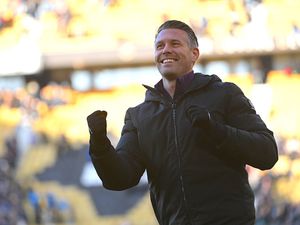
Wolves boss Mick McCarthy will be feeling an added weight of pressure as the house that Jack built prepares to give way to the house that Steve builds.
Wolves boss Mick McCarthy will be feeling an added weight of pressure as the house that Jack built prepares to give way to the house that Steve builds.
There cannot be a fan who will be gazing at today's first glimpses of owner Steve Morgan's vision for a future Molineux and not be tingling with excitement.
An imposing, grandiose stadium rising up out of that famous bowl where once the city's Victorian ancestors strolled through pleasure gardens blissfully unaware of what the future would bring.
But the one man not mentioned throughout yesterday's unveiling is now more important than ever - McCarthy.
Wolves have allowed themselves a little 'wiggle room' before activating these plans but at some stage next season Morgan, and Morgan alone, will either press the 'yes' button or reach for 'delay.'
In translation, this means the club are unlikely to go ahead if it is all coming apart on the pitch. This, of course, is the great danger of planning such grand and costly developments in a sport in which one injury, one refereeing decision or a shot which bounces off the bar can carry such far-reaching consequences.
So it's McCarthy faces the enormous pressure of ensuring Wolves can hold on to, and perhaps even advance a little further, their Premier League profile.
This is not to say that Morgan will not activate the plans even if security is not guaranteed, but it will make the re-build less problematic if the team can continue its top-flight progress.
Lest we forget, the reason why Molineux became such a lop-sided venue for football in the first place was because of former chairman Harry Marshall's late 1970s building of the John Ireland (Steve Bull) stand, it was meant as the first phase of a grander, bigger plan but on the pitch Wolves could not keep pace with its ambition and we all know what happened after that.
Even more difficulties will lie ahead for McCarthy or, indeed, any manager and group of players who may follow in this second decade of the new Millennium once the building starts. Molineux is going to be a mess for the next few years with, at times, only three sides of the ground open.
This is the biggest stadium project around these parts since Villa knocked down and rebuilt the old Trinity Road stand and their fans will tell you the loss of atmosphere during such projects is a major disadvantage.
Wolves must take the battle to the Premier League in the next few seasons similarly handicapped - but in the hope and conviction that the Molineux which will eventually emerge will once again be a source of strength, a place where visiting players fear to tread.
But surely these are all ambitions worth reaching for. Wolves have always had the heritage to warrant such plans but now they have the money and, the club insists, not at the expense of team investment.
The £40m redevelopment mapped out yesterday is an exciting confirmation of the owner's commitment to re-establishing the club among the nation's most prominent forces.
Sir Jack Hayward's 1992 re-build served its purpose in demolishing the derelict old stadium, which had gazed on the deeds of Cullis and Wright but fallen into such rank disrepair. But it proved to be merely a bridge between the club's glorious past and the future Morgan imagines.
Now Wolves fans can truly dream once more of re-shaping the scale of their ambitions. If the plans we are all gazing at today are fulfilled, they will not make Wolves a super power once more but they do give the club a chance to shake off the dust of its moderate profile of the last 30 years.
Morgan's vision is clearly fuelled by his experiences as a youngster standing on the Kop at Liverpool, pre all-seater stadiums, swaying with a baying crowd which hovered over opponents in a decibel-shredding fashion more menacing than even Tommy Smith's tackles.
Wolves fans of a more recent vintage will have to ask parents and even grandparents about what the old Molineux was like. But, packed to the rafters with one of the noisiest supports in the country, it flooded the senses with sound, colour and excitement. And frightened the heck out of the opposition.
That is what Morgan, a man in his middle 50s, remembers. That is what made him fall in love with football. That is what he wants to bring back to his 'new' passion, Wolves, now.
When he sat at Molineux in his first visits, he wondered what was missing and would have soon realised the distance from supporters to pitch and the open corners allowed the volume to escape from the stadium like hissing steam.
Playing at Wolves was simply not as frightening as it should have been for visiting teams. 'What might we achieve,' he pondered, 'if we could get that noise back?'
If he can bring these plans to fruition, he will perhaps discover. But oh what a tough, complex and challenging path now lies ahead for the club as its steels itself for a project which has the capacity to galvanise an entire community into fresh wonder and pride.
Clearly, they are going to need the faith and support of supporters more than ever before. Season-ticket holders are going to get shoved around, local residents will conduct their lives to a daily overture of lorries and scaffolding, the old place is going to be less than accommodating for a few seasons to come.
Not just for supporters but players, too. It won't feel like "home" for a while.
Amid such chaos, fans must cling to the vision of a new Molineux throbbing to an old sound. It captured the imagination of generations and inspired players to great deeds in the past.
The thrilling prospect is that it will do again.
By Martin Swain